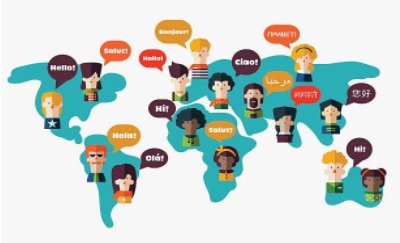
In the 21st century, there has been a huge transformation in teaching English due to the ongoing refugee crisis and globalisation of migration that includes refugees, skilled workers, and people simply looking to live a different type of life. The language currency for most of today’s world is the English language. So, no matter what the reason for migration, most of us need to learn English in order to communicate and go about our day-to-day lives in the countries of our choice or the ones chosen for us by The United Nations Refugee Agency (UNHCR). This brings us to the numerous acronyms around the world to describe English language learners.
The most prevalent label is learners of English as a Second Language (ESL). This stems from the belief that all learners of English will be learning the language as a second language. However, it is common knowledge that most non-English speaking students are fluent in a few languages. Therefore, English is not their second language, it is an additional language that they are learning either out of need or choice. Hence the term English as an Additional Language (EAL) that is now widely used in the United Kingdom and Australia and embedded in their respective curriculums.